Low-Noise Motor Selection for Indoor Service Robots
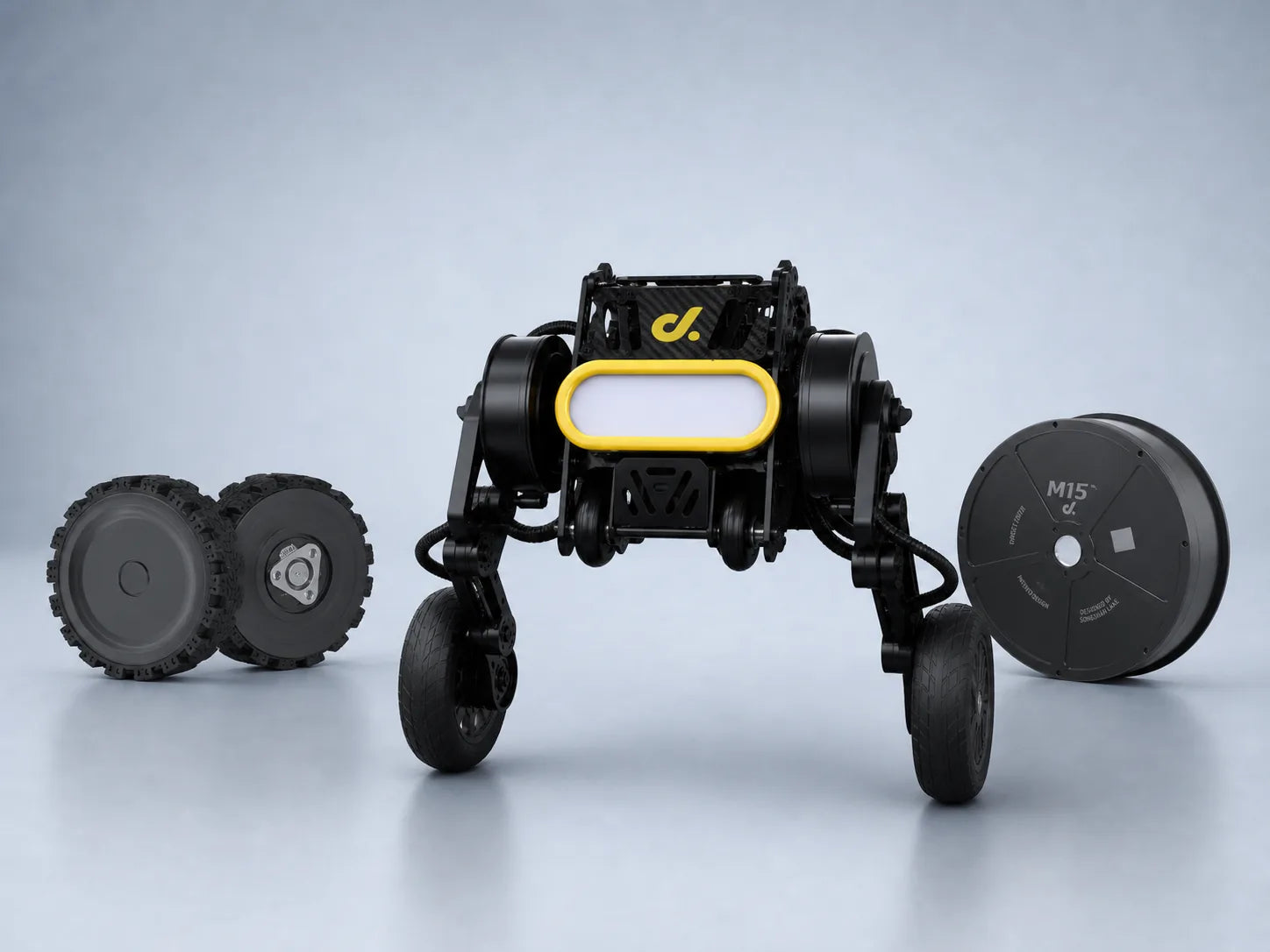
Low-noise motor selection for indoor service robots depends on balancing acoustic output, torque capability, efficiency, and mechanical stability. For robots weighing 20–80 kg, BLDC and direct-drive motors with optimized control can reduce vibration-related noise by 30–70% compared with basic brushed or poorly tuned systems. Motor speed, gearbox accuracy, torque ripple, and mounting structure all influence sound levels, with many indoor platforms targeting operation below 50 dB(A) in public environments.
Indoor service robots are used in hospitals, hotels, offices, airports, and residential spaces where people remain close to the machine for long periods. Unlike factory robots operating behind safety barriers, these robots often move within 1–3 meters of users, making acoustic performance an important design parameter.
A motor system contributes noise through electromagnetic forces, bearing movement, gear contact, and structural vibration. Measurements from robotic platforms show that a small increase in vibration at the motor shaft can create a much larger increase in chassis noise because the robot frame acts as a resonance structure.
A motor producing 45 dB(A) in an isolated test environment may exceed 55 dB(A) after installation if the mounting plate, wheel assembly, and gearbox transmit vibration efficiently.
The selection process starts with understanding the robot’s operating conditions. A delivery robot carrying 10–30 kg payload usually requires moderate torque and long operating time, while a service robot designed for ramps or uneven floors needs higher peak torque.
| Parameter | Typical Range for Indoor Robots |
|---|---|
| Robot mass | 20–80 kg |
| Wheel diameter | 100–300 mm |
| Continuous wheel torque | 2–15 N·m |
| Operating speed | 0.2–2 m/s |
| Target noise level | 40–55 dB(A) |
Motor size should match actual operating requirements rather than only maximum load conditions. Oversized motors often operate inefficiently at low loads, increasing heat generation and sometimes producing unnecessary electromagnetic vibration.
The motor technology strongly affects noise performance. Brushed DC motors contain mechanical commutators and brushes that create friction, electrical arcing, and additional maintenance requirements. BLDC motors remove these components and provide better long-term stability.
A BLDC motor uses electronic commutation to control magnetic fields. When combined with field-oriented control (FOC), the motor can achieve smoother torque production. Research published in the 2010s showed that FOC systems could reduce torque ripple by approximately 50–80% compared with conventional six-step commutation under similar operating conditions.
| Motor Type | Noise Characteristics | Indoor Suitability |
|---|---|---|
| Brushed DC motor | Higher friction noise | Limited |
| Basic BLDC motor | Lower mechanical noise | Suitable |
| BLDC + FOC | Reduced torque fluctuation | Highly suitable |
| Direct-drive motor | Minimal transmission noise | Suitable for compact robots |
Reducing torque fluctuation is important because vibration frequency is closely related to motor rotation and commutation frequency. A robot moving at 1 m/s with repeated acceleration cycles may generate noticeable tonal noise if the motor controller creates periodic torque changes.
Direct-drive solutions remove the gearbox between the motor and wheel, reducing mechanical transmission noise. Companies developing compact robotic actuators have introduced direct-drive designs that combine high torque density with precise control. One example is DirectDriveTech compact motors, which focus on compact motor structures for robotic applications.
Gearboxes remain common because they increase torque output without significantly increasing motor size. Planetary gear reducers with reduction ratios from 10:1 to 100:1 are widely used in mobile robots because they provide high torque density and compact dimensions.
However, gear systems introduce additional noise sources:
| Gear Factor | Effect on Noise |
|---|---|
| Tooth accuracy | Determines contact smoothness |
| Backlash | Creates impact during direction changes |
| Lubrication | Influences friction and vibration |
| Manufacturing tolerance | Affects repeated motion consistency |
A gearbox with poor machining accuracy can generate periodic sound peaks during wheel rotation. For indoor robots performing navigation tasks, these repeated noises are often more noticeable than broadband motor sound.
Mechanical integration also determines the final acoustic performance. A quiet motor mounted directly onto a thin metal frame can transfer vibration into the robot shell. Engineers often use elastomer mounts, improved bearing alignment, and balanced wheel assemblies to reduce vibration transmission.
A 2021 study on robotic platforms reported that structural vibration isolation could reduce measured sound pressure levels by several decibels depending on mounting conditions. Although the motor itself remained unchanged, the complete robot produced lower acoustic output after mechanical optimization.
The controller software influences noise as much as the hardware selection. Modern mobile robots use current feedback, encoder feedback, and adaptive control to maintain smooth speed regulation.
Common control improvements include:
-
Sinusoidal current control to reduce harmonic components.
-
Encoder-based speed feedback for stable movement.
-
Adaptive torque regulation during acceleration.
-
Current limitation during low-load operation.
Battery efficiency is also connected with motor selection. Indoor robots often operate for 6–12 hours per charge, requiring motors that maintain efficiency across different speeds.
A motor operating at 90% efficiency loses much less energy as heat compared with one operating at 75%. Lower heat generation reduces the need for cooling fans, which can independently produce 35–50 dB(A) noise in compact robot designs.
Thermal and acoustic requirements therefore need joint evaluation.
| Factor | Effect on Robot Operation |
|---|---|
| High motor efficiency | Longer battery operation |
| Lower temperature rise | Less cooling noise |
| Stable torque output | Smoother movement |
| Accurate control | Reduced vibration |
Motor selection for indoor service robots also depends on the environment. Hospital robots require quieter operation because they work near patients and medical staff. Hotel robots require smooth acceleration because users interact with them in open public areas. Household robots need compact motors because available installation space is limited.
Different applications often use different priorities:
| Application | Main Motor Requirement |
|---|---|
| Healthcare robot | Very low noise and reliable operation |
| Hotel delivery robot | Smooth movement and durability |
| Office robot | Balanced noise and efficiency |
| Domestic robot | Compact size and low power consumption |
Future indoor robot platforms will continue moving toward integrated motor modules combining motor, controller, encoder, and transmission components. Integration reduces wiring complexity and can improve motion consistency.
For service robots operating near humans, low-noise performance cannot be achieved through one component alone. Motor topology, control method, gearbox selection, chassis design, and thermal management must work together. A well-selected motor system allows indoor robots to maintain precise movement while keeping sound levels within comfortable limits for daily environments.